
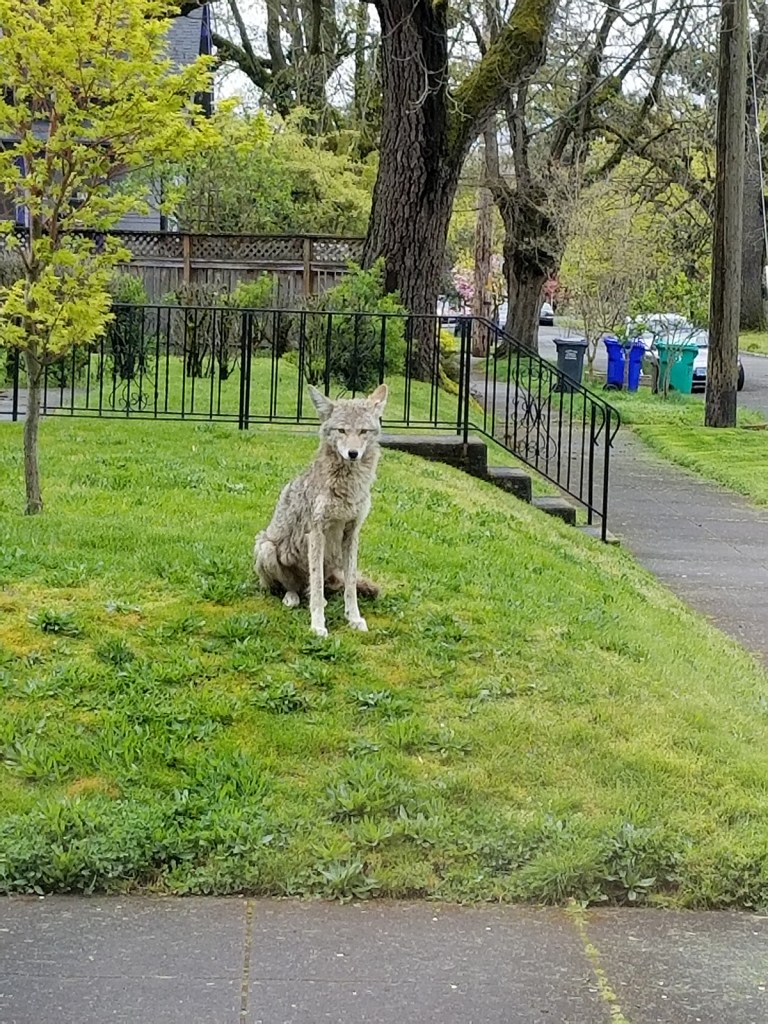
As urban growth continues to affect and alter the landscape, profound effects are and will continue to impact those that coexist with wildlife. Predators particularly pose wildlife managers, municipal governments and private stakeholders evolving challenges that must be met to ensure a healthy balance can be maintained. What was once widely culturally accepted responses to predators by way of eradication has greatly changed, particularly in urban environments. A desire to explore and find ways to cohabitate with predators among large segments of the population, is growing. What we appear to be facing is a very different management style to wildlife culturally in urban areas than has been practiced in the past.
Both sides of the debate surrounding wildlife management are charged with deep cultural beliefs and emotion not likely to be resolved by collaboration or discussion. On one hand, an isolationist approach is advocated to create a urban interface that wildlife lives in, removed from human contact and influence. A model for this approach could be the many national parks where wildlife has thrived in great numbers. On the other, hunters advocate for addressing predators in urban spaces with proactive hunting opportunities to ensure wildlife maintains a natural inclination to be fearful of human presence. Neither option is likely to be effective on its own in the current landscape in my opinion.
What should be considered when dealing with predator and human conflicts in the urban interface, is a flexible approach that is not one size fits all. As complex as animal ecosystems are, we should arrive to the conclusion that in some cases, both approaches can be successful for the cohabitation of humans and predators. It is critical for the long-term success of the predator population in urban areas. Humans will not tolerate attacks on pets or children, nor will they tolerate the eradication of an entire species from the last scape.
Looking towards the future when conflicts arise, an assessment based approached should be taken to understand the current situation or reality on the ground. With an accurate assessment, stakeholders can then make informed decisions based on predictable predator and human behavior as to how best manage the situation at hand. In this stage we humans have the greatest responsibility to remove our personal moral beliefs and determine what is best for the successful cohabitation of animals and humans.
 CSS Wildlife Management
Leave a comment